

Designing a Natural Hairline: How Many Grafts Are Required?
Designing a natural hairline is one of the most critical steps in a successful hair transplant. Many patients ask the same question during consultations: designing a natural hairline how many grafts are required? While there is no single number that fits everyone, understanding the key factors can help set realistic expectations and achieve natural-looking results.
What Does “Designing a Natural Hairline” Really Mean?
A natural hairline is not just about filling empty areas with hair. Instead, it involves creating a hairline that matches your facial structure, age, and future hair loss pattern. Moreover, expert doctors focus on angle, direction, and irregularity to avoid an artificial or straight-line appearance.
When done correctly, the hairline should look natural both up close and from a distance, blending seamlessly with existing hair.
Designing a Natural Hairline: How Many Grafts Are Required?
The number of grafts required for a natural hairline depends on multiple variables. Therefore, experienced surgeons never rely on fixed numbers. Instead, they evaluate each patient individually.
Key Factors That Affect Graft Count
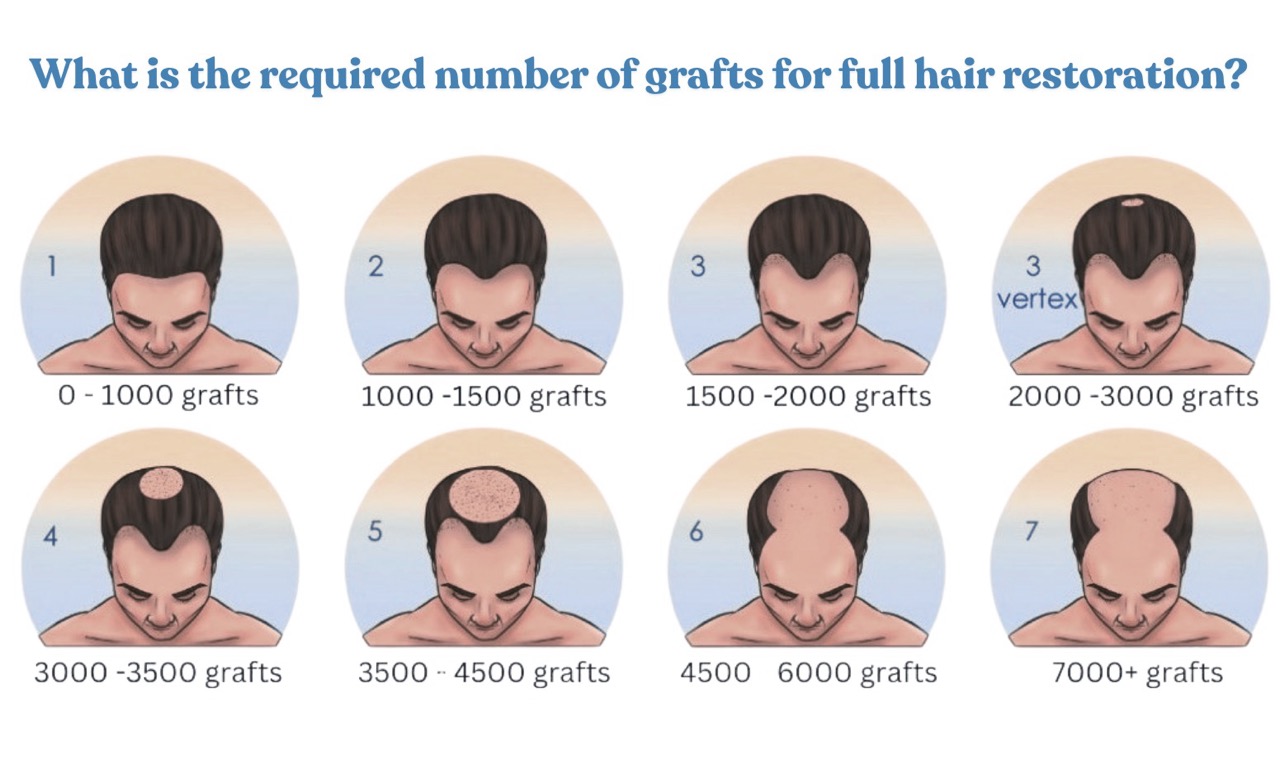
- Degree of hair loss (Norwood scale)
- Size of the frontal hairline area
- Hair thickness, color, and curl
- Donor area density and quality
- Age and likelihood of future hair loss
- Desired density and hairline shape
Average Graft Numbers for Hairline Restoration
Although every case is different, the following ranges provide a general idea:
- Mild recession: 800–1,200 grafts
- Moderate hairline loss: 1,500–2,000 grafts
- Advanced frontal hair loss: 2,200–2,800 grafts
However, using too many grafts in the hairline can look unnatural. Therefore, balance and strategy are more important than density alone.
Why Density Alone Does Not Create a Natural Hairline
Many patients believe higher density automatically means better results. In reality, a natural hairline uses mostly single-hair grafts in the front and gradually increases density behind it. This layered approach mimics how natural hair grows.
Furthermore, correct angulation and irregular placement are essential to avoid a “pluggy” or artificial look.

Why Surgeon Experience Matters
Designing a natural hairline requires both technical skill and artistic vision. An experienced surgeon considers long-term aging, facial proportions, and donor preservation. As a result, the hairline remains natural-looking even years after the procedure.
According to medical references such as Healthline’s guide on hair transplants , hairline design is one of the most important factors affecting patient satisfaction.
Personalized Planning Delivers the Best Results
There is no universal answer to the question: designing a natural hairline how many grafts are required. The best outcomes come from personalized planning, detailed analysis, and expert execution.
If you want to learn more about modern techniques such as FUE or DHI, you can explore our detailed guide on advanced hair transplant methods .
Final Thoughts
A natural hairline is not defined by numbers alone. Instead, it is the result of thoughtful design, precise graft placement, and experienced medical judgment. Consulting with skilled professionals ensures results that look natural today and remain appropriate in the future.
Related Keyphrases:
- best FUE hair transplant methods
- affordable hair restoration clinics
- natural hairline transplant results
